Preventive Maintenance in Industrial Ethylene Oxide Sterilizers: The Key to Pharmaceutical Continuity and Safety
24/11/26
In the pharmaceutical and medical device industries, sterilization is not merely a final step in the production line; it is the ultimate guarantee of patient safety.
When processing critical products such as syringes, catheters, or implants using Ethylene Oxide (EtO), every phase—preconditioning, gas injection, exposure, evacuation, and aeration—must execute within tightly defined tolerances.
Even the most robustly engineered industrial autoclaves require regular assessment to ensure they continue to operate as designed. A structured, engineering-driven preventive maintenance program provides continuous insight into equipment health, helping identify developing issues, correct deviations at an early stage, and maintain reliability, performance, and uptime over the equipment lifecycle.
1. Zero Unplanned Downtime in the Supply Chain
For a pharmaceutical company, an unexpected breakdown in an industrial sterilizer leads to immediate bottlenecks, batch release delays, and costly contractual penalties. A structured preventive maintenance plan identifies wear in critical components—such as valves, seals, sensors, and vacuum pumps—before they fail, allowing interventions to be scheduled without disrupting production targets.
- Vacuum & Fluid Systems: Inspection and servicing of liquid-ring or dry vacuum pumps, mechanical seals, pneumatic actuators, and process valves to prevent pressure decay failures.
- Chamber Integrity: Periodic replacement of inflatable door gaskets and static O-rings to maintain vacuum tightness and prevent leak-rate test deviations during deep-vacuum phases.
- Thermal & Humidity Control: Verification of steam traps, heat exchangers, and chamber jacket circulation to ensure uniform temperature distribution and accurate relative humidity (RH%) conditioning.
2. Protecting the Validated State and Process Data Integrity
EtO sterilization relies on the accurate and repeatable control of critical process parameters. Drift or loss of accuracy in temperature sensors (PT100 RTDs), chamber pressure transmitters, relative humidity probes, or other critical instrumentation can affect the reliability of process data and may require an assessment of its potential impact on the validated process.
A structured preventive maintenance program helps keep the equipment within the conditions under which it was qualified and the sterilization process validated, supporting continued compliance with applicable requirements such as ISO 11135 and, where relevant, electronic records and computerized system requirements such as FDA 21 CFR Part 11 and EU GMP Annex 11.
Preventive maintenance should therefore include:
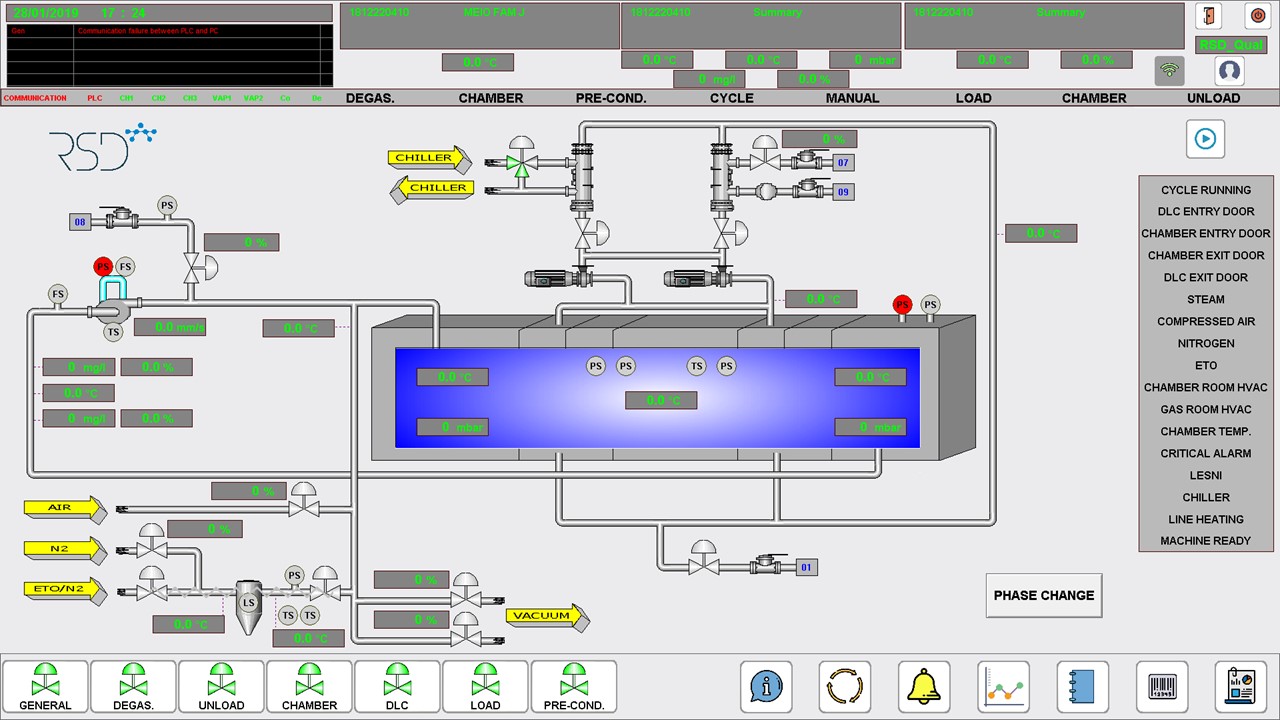
- ·Metrological calibration and verification of critical process instrumentation, using traceable reference standards and defined acceptance criteria.
- ·Verification of equipment and control performance, including PLC/SCADA control loops, alarms, interlocks, actuators, valves, and other functions that can influence critical process parameters.
- ·Verification of process data and electronic records, where applicable, to support data integrity, traceability, and the continued reliability of information used for process monitoring, batch assessment, and regulatory inspection.
A well-maintained sterilizer is not only more reliable. It helps protect the technical foundation on which your validated sterilization process depends.
3. Operational Safety and Risk Management
Ethylene oxide is a highly effective sterilant, but its hazardous properties require safety-critical components and functions to remain in proper operating condition. Preventive maintenance plays an important role in identifying deterioration, leakage risks, or functional deviations before they can affect the safe operation of the sterilizer.
RSD preventive maintenance focuses on the inspection and functional verification of safety-related systems within the scope of the sterilization equipment, including:
- Sealing and EtO containment: Inspection of chamber door seals, gaskets, EtO piping, valves, connections, and other components involved in maintaining system integrity and minimizing the risk of unintended EtO releases.
- Safety interlocks and permissives: Functional verification of door interlocks, process permissives, alarms, emergency conditions, and PLC-controlled safety sequences associated with the operation of the sterilizer.
- Valves and mechanical safety components: Inspection and functional checks of isolation, process, and safety-related valves and actuators to identify wear, deterioration, leakage, or abnormal operation.
- Safety-related instrumentation: Verification of instrumentation and signals used by the sterilizer control system to monitor process conditions and execute its designed alarm and interlock functions.
- Preventive inspection of critical components: Systematic review of components whose deterioration could affect equipment safety, allowing corrective actions to be identified before they develop into operational risks.
External safety systems such as facility gas detection, environmental monitoring, ventilation systems, and EtO abatement or emission-control equipment remain subject to the maintenance and verification responsibilities defined for each installation.
Effective preventive maintenance does more than improve equipment availability. It helps ensure that the sterilizer’s safety functions remain reliable throughout its operational life.
4. Extending Asset Lifecycle and Optimizing Cycle Efficiency
An industrial EtO autoclave is a capital-intensive asset designed for long-term operation. A structured preventive maintenance program helps preserve equipment condition and performance by identifying wear, degradation, and operating deviations before they develop into failures. Maintaining the equipment within its intended operating conditions supports consistent cycle performance and efficient use of resources, helping extend its service life, control operating costs, and maximize long-term Return on Investment (ROI). 
EtO Engineering Specialists: Comprehensive Multi-Brand Support
As original equipment manufacturers (OEMs), we possess deep engineering knowledge of the EtO sterilizers, regulatory demands, and criticality of ethylene oxide autoclaves. Because of this expertise, our preventive maintenance and technical services extend beyond our own autoclaves to include sterilizers built by third-party manufacturers.
We recognize that many pharmaceutical facilities operate mixed equipment fleets. Consolidating maintenance with a team of engineers who are true experts in EtO technology simplifies vendor management, ensures interventions meet the highest quality standards, and maximizes the uptime of your entire sterilization line – regardless of the original equipment manufacturers (OEM).
When was the last time you reviewed the maintenance plan for your sterilization equipment? Contact our technical service team to design a tailored preventive program—for both our autoclaves and third-party units—and ensure peak performance across your facility.
EtO sterilizers EtO process expertise